
What Should a Small Business Email Newsletter Actually Say? (A Real-World Template)
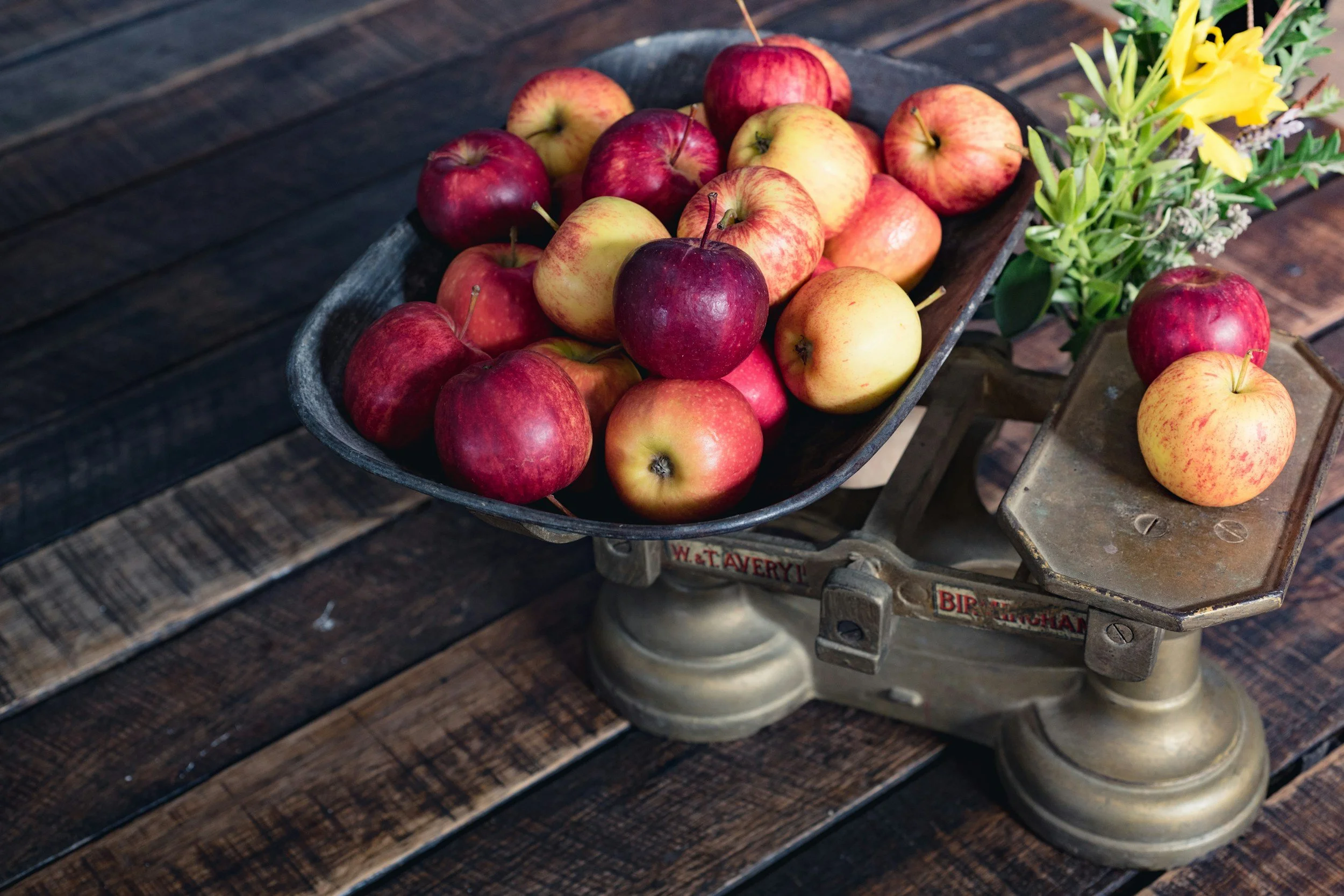
New England Apples from Apex Orchards - Shelburne Massachusetts.
You don't need to be a writer. You need a structure that works every time.
I hear this from almost every small business owner I work with: "I know I should be sending emails. I just never know what to say."
So nothing goes out. Weeks turn into months. The Mailchimp account sits there, half set up, with 47 subscribers and zero campaigns sent. And meanwhile, every single one of those 47 people has quietly forgotten you exist.
Here's what I want you to understand before we go any further: you don't need to write a masterpiece. You don't necessarily need a "content strategy." You don't need to be clever. You need to show up in someone's inbox, be genuinely useful for about 90 seconds, and give them a reason to think of you the next time they need what you sell.
That's it. And I'm going to give you a repeatable formula you can use every single time you sit down to write one of these.
Why Email Still Beats Everything Else
Before we get to the how, let me make the case briefly, because you're busy.
Email marketing returns an average of $36 for every $1 spent. Not social media. Not paid ads. Not Google. Email. That figure comes from Litmus, and it's been consistent for years. The reason is simple: the people on your email list have already raised their hand. They gave you their address. They said yes, I want to hear from you. That's a fundamentally different relationship than someone scrolling past your Instagram post.
Social media is a rented space. You don't control who sees your posts, and the platforms change the rules whenever they feel like it. Your email list is yours. It goes where you go. And it converts at rates that social media can't touch.
If you're a small business owner and you're only going to do one piece of digital marketing consistently, make it email. Now let's talk about what to actually write.
The Farm at Fox Hill 3-Part Email Formula
Every good email newsletter does three things. Not five. Not ten. Three. You can write this in under 30 minutes once you've done it a couple of times.
Part 1: One Useful Thing
Open your email with something the reader can actually use. A tip. A recommendation. A piece of knowledge they didn't have before they opened the email.
This is the reason they stay subscribed. Not your promotions, not your news, not your personality (that comes later). The useful thing is the promise you make every time you land in someone's inbox: reading this was worth your time.
It doesn't have to be long. Three to five sentences are plenty. And it should be specific to your business and your world, not generic advice they could get from a Google search.
Here's what this looks like for different types of businesses:
If you run a farm stand: "The sweetest corn is the corn you eat the same day it's picked. Here's how to tell if the corn at any farm stand was picked today versus yesterday: pull back the husk at the top and press a kernel with your thumbnail. If it pops and the liquid is milky, it's fresh. If the liquid is clear, it was picked too early. If nothing pops, it's been sitting."
If you run a café or restaurant: "We changed one thing about how we brew our iced coffee this summer, and people keep asking about it. We're cold-brewing with a coarser grind and steeping 18 hours instead of 12. The result is less bitter, slightly sweeter, and we don't add any sugar. Try it next time you're in, and if you want to make it at home, ask us for the ratio."
If you run a retail shop: "Three of our best-selling candles are made by a woman in Northampton who hand-pours every batch in her garage. Her lavender-sage is our top seller all year, but she just dropped a new fall scent, apple orchard with a little smoke — that's going to fly. We put it on the shelf on Tuesday."
If you're a maker or artisan: "Someone asked me last week why my cutting boards cost more than the ones at Target. Fair question. The short answer: I use end-grain construction, which means the knife cuts between the wood fibers instead of across them. The board lasts decades instead of years, it's gentler on your knives, and it doesn't develop the grooves that trap bacteria. Here's a picture of a board I made 11 years ago; still in daily use."
If you run an inn or B&B: "October is the best month for foliage in our valley, but the real trick is timing. Peak color typically hits us in the second and third weeks, usually October 10–22, and you can see it from our back porch without getting in a car. If you want the drive, the Mohawk Trail stretch between Shelburne Falls and North Adams is 45 minutes of nonstop color. We keep a whiteboard in the lobby tracking which areas are peaking."
See the pattern? Each of these gives the reader something they can use, something specific, and something that only you could tell them because you know your craft.
Part 2: One Personal Thing
After the useful part, shift to something human. A story from your week. A behind-the-scenes moment. An honest reflection. A quick update on your business.
This is the part that makes people feel like they know you. And that matters, because people buy from people they feel connected to. Not from businesses. From people.
Keep it short; two to four sentences is plenty. And don't overthink it. The best personal sections are the ones that feel like you're telling a friend what happened this week.
Some examples:
"My daughter helped at the stand last Saturday and informed me that our sign font is 'giving 2014.' I'm choosing to take that as a compliment."
"We painted the porch last weekend, and I'm still finding Sage Green on my elbows. But the shop looks great for summer; come see it."
"I burned two batches of scones on Tuesday, trying to test a new blueberry recipe. Third time worked. They'll be on the menu this weekend. Probably."
"A guest checked out on Sunday and left a note that said this was the first trip she'd taken alone in seven years. That's the kind of thing that reminds me why we do this."
That's it. You're not writing a memoir. You're letting people see a real person behind the business name. It takes two minutes, and it's the part of your email people will remember.
Part 3: One Ask
Every email ends with one clear thing you want the reader to do. Not three. Not "check out our new products AND follow us on Instagram AND share this with a friend." One thing.
Some options:
Come visit this weekend (with your hours and address)
Pre-order something specific
Sign up for an event or class
Reply to the email with their answer to a question you asked
Check out a new product on your website (with a direct link)
Forward this email to a friend who'd enjoy it
The ask should feel natural. It's not a hard sell. It's the friendly "oh, and one more thing" at the end of a conversation. Match it to whatever's most timely; if it's mid-September and you have apple cider donuts launching, that's your ask. If it's January and things are quiet, ask people to reply and tell you what they want to see from you this spring.
Putting It Together: A Complete Email Example
Here's what a finished email looks like using this formula. This one's written for a fictional farm stand, but the structure works for any of the five business types above.
Subject line: The trick to keeping herbs alive all summer
Hey [First Name]
I watched a customer buy a beautiful pot of basil last Saturday, and I could already tell it would be dead in a week. Not because she did anything wrong, but it's because grocery-store basil and nursery basil are grown in tiny pots with weak root systems. They're designed to look good on the shelf, not to survive your kitchen.
If you want basil (or cilantro, or parsley) that actually lasts, here's what to do: buy it from someone who grew it in real soil, and when you get it home, repot it into something at least twice the size of whatever it came in. Give it morning sun and keep the soil damp but not soggy. Pinch the top leaves every week to keep it from bolting. That's it. You'll have basil through October.
We're growing six varieties of basil this year, and they're all on the table this weekend, Thai, Genovese, lemon, purple, cinnamon, and our new one: African Blue, which has these gorgeous purple flowers and a slightly spicy flavor. Come smell it. You'll know.
On a personal note, we finally fixed the gravel in the parking area. If you visited in May and rattled your teeth on the potholes, I'm sorry. It's smooth now. The chickens are unimpressed.
This weekend's hours: Saturday and Sunday, 9am–4pm. We're on Route 10 in Bernardston, just past the bridge.
See you out here, [Your Name]
P.S. — We're taking pre-orders for our Thanksgiving turkey packages starting next month. If you want to make sure you get one, reply to this email and I'll put you on the list.
Subject Lines That Get Opened
Your email is worthless if nobody opens it. And the subject line is the only thing standing between your carefully written email and the trash folder.
Here's what works for small businesses:
Be specific. "the trick to keeping herbs alive all summer" beats "Our June Newsletter" every time. Nobody has ever been excited to open a "monthly newsletter." Give them a reason.
Be lowercase. It sounds like a text from a friend, not a marketing email. Lowercase subject lines consistently outperform title case for small businesses and personal brands.
Keep it under 8 words. On mobile (where most people read email now), long subject lines get cut off. Get the good part in the first 5–6 words.
Avoid trigger words. "FREE," "BUY NOW," "LIMITED TIME," and anything with multiple exclamation points will land you in spam. And honestly, they don't sound like you anyway.
Some subject line examples that would work for small businesses:
"we're only growing three tomato varieties this year"
"what to order when you don't know what to order"
"the soap that sold out in two hours (it's back)"
"our quietest room just opened up for October"
"the $3 thing that changed our display overnight"
Each of these creates curiosity without being clickbait. They sound like something a real person would say. That's the bar.
How Often to Send
Once a week is ideal. If that feels like too much, every other week works. Anything less than twice a month and people start forgetting who you are.
Pick a day and stick to it. Tuesday, Wednesday, and Thursday mornings tend to perform best for small businesses, but honestly, consistency matters more than the specific day. If you send every Wednesday at 9am, your regulars will start expecting it.
During your busy season, weekly is the move. During the slow season, twice a month is fine, but don't disappear entirely. The slow season is actually when your email matters most, because it's how you stay in someone's head until they're ready to buy again.
Tools That Make It Easy
You don't need fancy software. Two options that work well for small businesses:
Mailchimp (free up to 500 subscribers) is the most common starting point. The free tier gives you everything you need: a subscriber list, basic templates, and send scheduling. Don't get lost in the advanced features. Use the simple drag-and-drop editor, write your email, hit send.
Squarespace Email Campaigns (included with most Squarespace plans) is even simpler if your website is already on Squarespace. It pulls in your site's design automatically, the editor is clean, and your subscriber list lives right alongside your website. If you're already on Squarespace, start here.
Either way, you can build and send a solid email in under 30 minutes once you know the formula. The first one takes longer. The tenth one takes 20 minutes.
The Real Thing Holding You Back
It's not the tools. It's not the writing. It's the feeling that you'll send an email and nobody will care, or that you're bothering people, or that what you have to say isn't interesting enough.
Here's the truth: the people on your list signed up because they like what you do. They want to hear from you. The email that feels boring to you — because you wrote it and you live this every day is interesting to the person who only thinks about your business when you remind them it exists.
You're not bothering anyone. You're showing up. And for a small business, showing up consistently is the thing that separates the businesses that grow from the ones that stay invisible.
What to Do Right Now
Open Mailchimp or Squarespace Email Campaigns. Write one email using the 3-part formula: one useful thing, one personal thing, one ask. Send it to your list, even if your list is 12 people.
Then do it again next week.
If you want to see this formula in action every week, sign up for the Farm at Fox Hill newsletter. I use this exact structure, and you can steal anything that works for your own business.
And if you want the full system, email marketing plus everything else your business needs to get found, stay visible, and build a customer base that keeps coming back, preview the first module of the Marketing Academy free. It's built for people exactly like you: great at what you do, too busy for marketing theory, and ready for someone to just tell you what to do step by step.
P.S. — Next week I'm covering what to post on Instagram when you run a restaurant. It's 30 specific ideas, organized by type, so you never stare at a blank screen wondering what to share. Works for non-restaurants too, with a little adapting.
Amy Vosko is the founder of Farm at Fox Hill — a marketing education and consulting company on Fox Hill Road in Bernardston, Massachusetts. She spent 30 years in Fortune 500 marketing and now builds practical marketing systems for the farms, shops, and small businesses across New England that deserve the same expertise.
